 TravTalk India Online Magazine

The festival foregrounds living Himalayan traditions under the theme Ours to Tell, combining rider-led documentation, a new publication and a craft bazaar to broaden public engagement and inform future cultural tourism offerings.
 Rahul Bhadana
As demand for experience-led travel grows, Journeying across the Himalayas reframes heritage as a platform for community-led tourism and destination storytelling. The second edition opens on 4 December at Travancore Palace, New Delhi, and positions documentation, public engagement and artisan livelihoods at the centre of cultural tourism conversations.
Organised by Royal Enfield Social Mission, the festival runs until 10 December and features a book launch, keynote addresses, conversations, performances and a Himalayan craft bazaar with about 50 participating organisations. The programme — under the theme Ours to Tell — showcases stories, practices and material culture from the eastern and western Himalayas.
A festival of journeys and stories
Bidisha Dey, Executive Director, Eicher Group Foundation, opens the evening by outlining the project’s scope. “We started out with an ambitious target of looking at 200 practices,” she says, noting that the first publication from the initiative is launched at the festival. She stresses accessibility: “Heritage should not be behind the glass. It is something to be experienced, to be engaged and to be carried forward from one generation to the other.”
The festival integrates exhibitions, installations and live practices, inviting visitors to interact with craftspeople, performers and researchers. Dey encourages audiences to explore the Himalayan bazaar and food court, underscoring the festival’s role in connecting creators with wider markets.
From road to archive: Rider researchers and the new book
Royal Enfield’s Great Himalayan Exploration converts motorcycle journeys into field research, with rider researchers documenting oral traditions, crafts and cultural practices across the region. The new publication compiles these accounts from the eastern Himalayas and presents them with editorial context and visual material — such documentation can inform community-based itineraries, cultural circuits and experience design, strengthening the content base for Himalayan tourism products.
Safeguarding practice, enabling practice
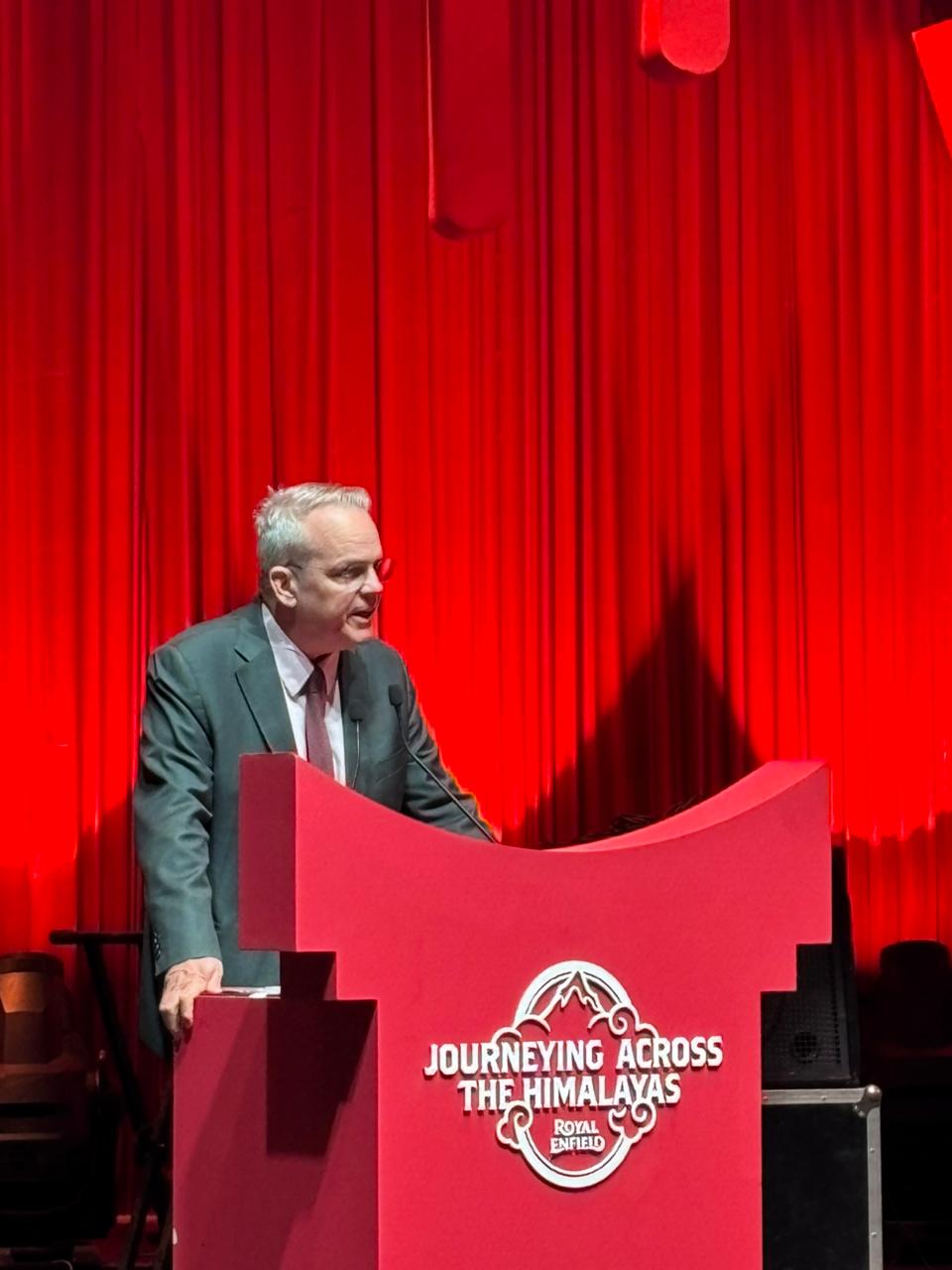
Delivering the keynote, Tim Curtis, Director and Representative, UNESCO Regional Office for South Asia, places the initiative within broader safeguarding priorities. “Heritage lives because communities have kept it and continue to keep it alive,” he says, noting that the Himalayan region is culturally rich but environmentally fragile. He reiterates that safeguarding depends on community agency and institutional support working together.
He emphasises that documentation becomes meaningful when it supports intergenerational transmission — a principle also relevant to sustainable tourism planning.
What this means for the trade
For operators, DMCs and product developers, the festival offers practical insights and new points of engagement: documented practices, direct access to craft organisations and content for itinerary-building. With nearly 50 artisan groups present, the bazaar provides immediate opportunities for collaboration, sourcing and product diversification.
Next steps
With exhibitions open until 10 December and continued collaboration between Royal Enfield and UNESCO, further programmes are expected. The initiative is likely to generate more material that can support cultural tourism development and strengthen community-linked experiences across the Himalayas.